
Contents
- 1. Key Takeaways
- 2. Insights
- 3. The Business Imperative for Digital Transformation
- 4. Core Pillars of an Enterprise-Wide Digital Strategy
- 5. Emerging Technologies Reshaping Modern Enterprises
- 6. Data-Driven Decision Making and Analytics
- 7. Cybersecurity and Digital Risk Management
- 8. Workforce Transformation and Organizational Agility
- 9. Key Trends and Challenges Defining the Digital Era
- 10. Conclusion
- 11. FAQs
Table of Contents
ToggleKey Takeaways
Digital transformation has become a defining factor in long-term business success, enabling organizations to adapt, innovate, and thrive in an increasingly dynamic marketplace. A well-executed digital strategy empowers enterprises to unlock greater efficiency, elevate customer experiences, and build enduring competitive advantages. Key considerations include:
- Harnessing emerging technologies to drive innovation and operational excellence.
- Leveraging data and analytics to support strategic, insight-led decision-making.
- Strengthening customer engagement and organizational resilience to sustain growth in a rapidly evolving digital landscape.
Insights
In an era defined by rapid technological advancement and evolving market expectations, digital transformation has emerged as a strategic imperative rather than a discretionary initiative. Forward-thinking organizations are increasingly leveraging digital capabilities to cultivate operational excellence, enhance stakeholder value, and establish enduring competitive advantages. Beyond the adoption of new technologies, successful transformation demands a holistic alignment of strategy, culture, and innovation to ensure sustained relevance in a dynamic business landscape. Key insights include:
- Digital maturity has become a defining characteristic of industry leaders, enabling greater agility, resilience, and long-term value creation.
- The convergence of emerging technologies and rising customer expectations continues to redefine competitive benchmarks across sectors.
- Sustainable growth is achieved when digital initiatives are intricately integrated with organizational vision, leadership priorities, and enterprise-wide objectives
The Business Imperative for Digital Transformation
In an era characterized by unprecedented technological disruption and evolving market paradigms, digital transformation has emerged as a strategic imperative of paramount importance. No longer confined to incremental process enhancements, it represents a profound shift in how organizations create value, cultivate resilience, and sustain competitive pre-eminence within an increasingly sophisticated business ecosystem.
Contemporary enterprises are operating in an environment where agility, innovation, and adaptability have become indispensable determinants of long-term success. Consequently, organizations are compelled to transcend conventional operating models, modernize legacy infrastructures, and foster a culture underpinned by continuous innovation and strategic foresight. Digital transformation empowers businesses to optimize operational efficiencies, unlock new avenues of growth, and deliver elevated customer experiences while reinforcing enterprise-wide resilience.
Furthermore, the accelerating convergence of emerging technologies and heightened stakeholder expectations has fundamentally redefined the parameters of competition. Digital capabilities are no longer perceived as a differentiator but as an essential prerequisite for preserving strategic relevance and driving sustainable value creation. Organizations that embrace transformation with clarity of purpose and a future-oriented vision are inherently better positioned to navigate market complexities, capitalize on emerging opportunities, and secure enduring competitive advantages.
Several factors underscore the growing urgency of digital transformation:
- Escalating customer expectations and the increasing demand for hyper-personalized experiences.
- The proliferation of disruptive technologies reshaping industry dynamics.
- The imperative for enhanced agility, scalability, and organizational resilience.
- Intensifying competitive pressures and the pursuit of enduring enterprise value.
- The necessity to future-proof business models amid rapidly evolving economic and technological landscapes.
Core Pillars of an Enterprise-Wide Digital Strategy
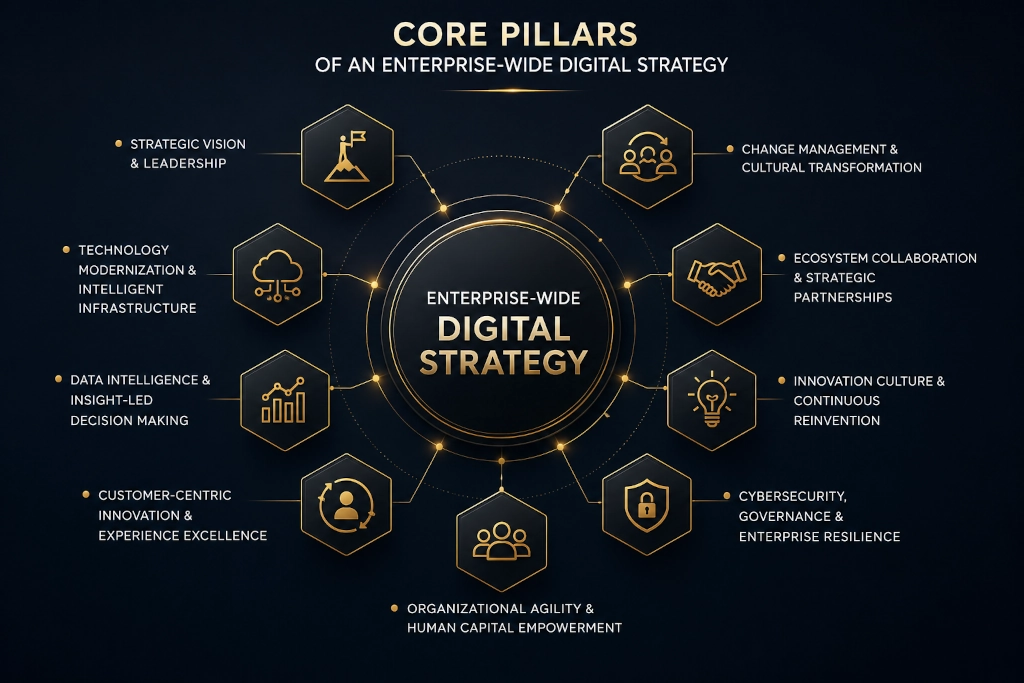
In an era distinguished by relentless technological advancement and increasingly intricate market dynamics, digital transformation has evolved into a multidimensional endeavor that extends far beyond the mere implementation of sophisticated technologies. It represents a fundamental reconfiguration of how organizations operate, innovate, and deliver value across the enterprise. Consequently, a truly effective digital strategy cannot be approached as an isolated initiative; rather, it must be envisioned as an enterprise-wide mandate that permeates every layer of the organization.
The most successful enterprises are those that recognize digital transformation as a catalyst for enduring growth, organizational resilience, and sustained competitive pre-eminence. Such organizations cultivate a symbiotic relationship between strategic vision, technological sophistication, and human capital, thereby establishing an ecosystem capable of adapting to evolving market exigencies and capitalizing on emerging opportunities. By harmonizing innovation with operational excellence, businesses can create a formidable foundation that not only safeguards relevance but also enables them to thrive amid an increasingly volatile and digitally driven economy.
To achieve transformational outcomes and unlock long-term value creation, organizations must establish a fortified framework anchored by several foundational pillars that collectively define the essence of a comprehensive enterprise-wide digital strategy.
Strategic Vision and Transformational Leadership
Every successful digital initiative is predicated upon a compelling strategic vision and resolute leadership. Digital transformation necessitates more than executive sponsorship; it demands visionary stewardship capable of articulating a clear roadmap and aligning organizational priorities with long-term aspirations.
Leaders who champion innovation and foster a culture of adaptability empower their organizations to navigate complexity with confidence. Their ability to inspire cross-functional collaboration and cultivate enterprise-wide alignment serves as a critical determinant of transformational success.
Technology Modernization and Intelligent Infrastructure
At the heart of every digitally mature enterprise lies a resilient and scalable technological foundation. Legacy infrastructures, while once adequate, often impede versatility and constrain innovation in today’s hyperconnected environment. Consequently, organizations must prioritize the modernization of their technological ecosystems to remain competitive and responsive.
By embracing cloud architectures, intelligent automation, advanced platforms, and interconnected systems, enterprises can enhance operational dexterity, expedite workflows, and establish the technological sophistication necessary to support sustained growth and innovation.
Data Intelligence and Insight-Led Decision Making
In the contemporary business landscape, data has emerged as an invaluable strategic asset capable of shaping competitive trajectories. Organizations that effectively harness the power of data intelligence are uniquely positioned to derive actionable insights, anticipate market shifts, and optimize business outcomes with greater precision.
Advanced analytics, predictive modeling, and real-time intelligence enable enterprises to transcend intuition-based decision-making and embrace a more informed and evidence-driven approach. This capability not only enhances operational efficiency but also facilitates superior strategic planning and accelerated value realization.
Customer-Centric Innovation and Experience Excellence
Modern consumers increasingly gravitate toward brands that deliver personalized, innate, and value-centric experiences. As customer expectations continue to evolve, organizations must place experience excellence at the epicenter of their digital transformation agendas.
A customer-centric philosophy enables enterprises to cultivate deeper relationships, strengthen brand affinity, and differentiate themselves within crowded marketplaces. By leveraging digital capabilities to create meaningful and continuous interactions, organizations can elevate customer satisfaction while fostering enduring loyalty and sustained revenue growth.
Organizational Dynamism and Human Capital Empowerment
Technology alone does not drive transformation; people remain the quintessential enablers of meaningful and sustainable change. Consequently, fostering a workforce characterized by adaptability, digital fluency, and innovative thinking is indispensable for long-term success.
Organizations that prioritize continuous learning, knowledge enhancement, and collaborative cultures are inherently better equipped to respond to evolving business realities. Empowered employees contribute to heightened productivity, accelerated innovation, and enhanced organizational resilience, thereby reinforcing the enterprise’s capacity to thrive amidst uncertainty.
Cybersecurity, Governance, and Enterprise Resilience
As digital ecosystems become increasingly sophisticated and interconnected, safeguarding organizational assets and preserving stakeholder trust assume unparalleled significance. Cybersecurity is no longer merely a technical consideration; it has emerged as a strategic imperative integral to enterprise sustainability.
Vigorous governance frameworks, proactive risk management practices, and resilient security architectures collectively enable organizations to mitigate vulnerabilities and maintain operational continuity. In an age characterized by escalating cyber threats and regulatory complexities, resilience has become synonymous with responsible digital leadership.
Innovation Culture and Continuous Reinvention
Digital excellence is not achieved through isolated milestones but through an enduring commitment to innovation and continuous evolution. Organizations that consistently challenge conventional paradigms and embrace emerging technologies are better positioned to redefine industry standards and unlock new avenues of growth.
Fostering a culture of experimentation, intellectual curiosity, and strategic reinvention enables enterprises to remain iterative in the face of disruption. More importantly, it empowers them to transform uncertainty into opportunity and sustain competitive distinction in an increasingly dynamic global marketplace.
Ecosystem Collaboration and Strategic Partnerships
No organization can achieve digital supremacy in isolation. The complexities of the modern digital economy necessitate collaborative ecosystems built upon strategic alliances, technology partnerships, and cross-industry synergies.
By cultivating mutually beneficial relationships with technology providers, innovators, and industry stakeholders, enterprises can accelerate transformation initiatives, access specialized expertise, and amplify their capacity for innovation. Such collaborative ecosystems serve as powerful catalysts for sustainable growth and long-term value creation.
Change Management and Cultural Transformation
One of the most profound determinants of digital success resides in an organization’s ability to embrace change. Transformational initiatives frequently encounter resistance when cultural readiness and employee engagement are overlooked.
Organizations that foster transparency, inclusivity, and a shared sense of purpose are more likely to cultivate widespread adoption and organizational cohesion. A progressive and innovation-oriented culture not only facilitates successful transformation but also establishes a durable foundation for sustained excellence.
Ultimately, an enterprise-wide digital strategy is not merely a technological blueprint—it is a strategic manifesto for growth, resilience, and enduring relevance. Organizations that successfully integrate these foundational pillars into their broader corporate vision are exceptionally well-positioned to navigate complexity, capitalize on emerging opportunities, and establish a legacy of sustained leadership within the digital age.
Emerging Technologies Reshaping Modern Enterprises
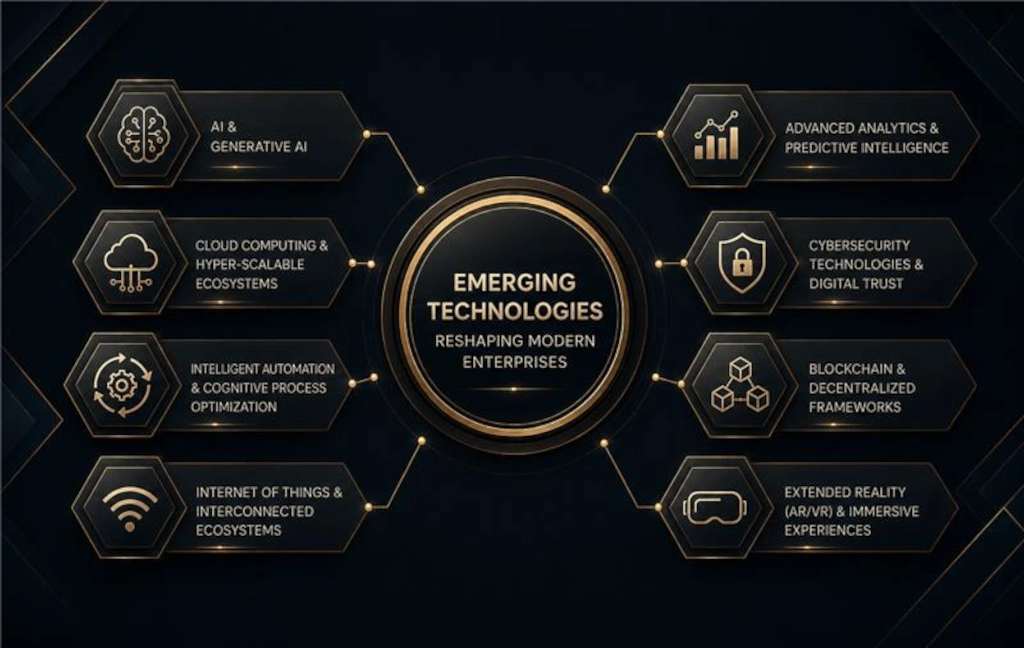
The contemporary business landscape is witnessing an unprecedented technological renaissance, where innovation has become the cornerstone of sustainable growth and competitive differentiation. As industries continue to evolve amidst accelerating digital disruption, emerging technologies are no longer perceived as peripheral enhancements but as transformative forces fundamentally redefining the architecture of modern enterprises. Organizations are increasingly recognizing that technological sophistication is indispensable for cultivating operational excellence, enhancing stakeholder experiences, and preserving strategic relevance in an environment characterized by relentless change.
From intelligent automation and advanced analytics to decentralized ecosystems and immersive digital experiences, these groundbreaking innovations are orchestrating a paradigm shift in how businesses operate, compete, and create value. Enterprises that embrace these technologies with strategic foresight and visionary leadership are exceptionally positioned to unlock unprecedented opportunities, foster organizational resilience, and establish enduring market leadership. The following technological advancements are shaping the future trajectory of enterprise transformation and redefining the parameters of competitive excellence.
Artificial Intelligence and Generative Intelligence
Artificial Intelligence (AI) has emerged as one of the most consequential technological breakthroughs of the digital era. By augmenting human intelligence with advanced computational capabilities, AI is enabling organizations to optimize decision-making, automate complex processes, and deliver highly personalized customer experiences.
The advent of Generative AI has further amplified these capabilities, empowering enterprises to accelerate innovation, enhance productivity, and foster intelligent collaboration across diverse business functions. From predictive insights to conversational interfaces, AI is revolutionizing the very fabric of enterprise operations and establishing new standards of efficiency and ingenuity.
Cloud Computing and Hyper-Scalable Digital Ecosystems
Cloud computing has fundamentally transformed the technological underpinnings of modern enterprises by delivering unparalleled flexibility, scalability, and operational resilience. Contemporary cloud infrastructures enable organizations to optimally adapt to evolving business demands while optimizing resource allocation and accelerating digital initiatives.
Moreover, hybrid and multi-cloud environments are fostering interconnected ecosystems that facilitate collaboration, enhance agility, and support enterprise-wide innovation. As businesses increasingly prioritize scalability and responsiveness, cloud technologies continue to serve as the bedrock of digital transformation strategies.
Intelligent Automation and Cognitive Process Optimization
The proliferation of intelligent automation is redefining operational paradigms across industries. By integrating robotic process automation, machine learning, and cognitive technologies, organizations are expedite workflows, minimizing inefficiencies, and enhancing organizational productivity.
Beyond improving operational precision, intelligent automation enables enterprises to redirect human capital toward strategic and value-centric initiatives. Consequently, businesses are cultivating greater rapid innovation and achieving superior levels of operational sophistication, thereby strengthening their capacity to thrive in an increasingly competitive environment.
Internet of Things and Interconnected Enterprise Ecosystems
The Internet of Things (IoT) is ushering in a new era of interconnected intelligence, enabling enterprises to establish highly integrated ecosystems capable of generating real-time insights and enhancing operational visibility.
Through connected devices and sensor-driven technologies, organizations can monitor assets, optimize supply chains, and facilitate predictive maintenance with unprecedented accuracy. This heightened level of connectivity is empowering businesses to improve efficiency, enhance customer experiences, and foster resilient operational frameworks.
Advanced Analytics and Predictive Intelligence
Data has emerged as one of the most strategic assets within the digital economy, and enterprises are increasingly leveraging advanced analytics to derive meaningful insights and drive informed decision-making.
Predictive intelligence and sophisticated analytical frameworks enable organizations to anticipate market fluctuations, understand customer behavior, and identify emerging opportunities with remarkable precision. This data-centric approach empowers enterprises to formulate proactive strategies, optimize performance, and unlock enduring value creation.
Cybersecurity Technologies and Digital Trust Architecture
In an increasingly interconnected world, the preservation of digital trust has become a strategic imperative of paramount importance. As cyber threats continue to evolve in complexity and scale, enterprises are investing heavily in advanced cybersecurity technologies to safeguard critical assets and maintain stakeholder confidence.
Artificial intelligence-driven threat detection, zero-trust architectures, and sophisticated risk management frameworks are enabling organizations to fortify their digital ecosystems against emerging vulnerabilities. In the digital age, cybersecurity is no longer merely a protective mechanism—it has become a cornerstone of enterprise resilience and sustainable growth.
Blockchain and Decentralized Digital Frameworks
Blockchain technology is redefining transparency, accountability, and security across multiple industries. Its decentralized architecture facilitates immutable record-keeping and secure transactions, thereby enhancing trust among stakeholders and mitigating operational risks.
Beyond cryptocurrency applications, blockchain is increasingly influencing supply chain management, financial services, healthcare, and digital identity verification. As enterprises pursue greater transparency and efficiency, blockchain is poised to become an integral component of next-generation business ecosystems.
Edge Computing and Low-Latency Intelligence
The exponential growth of connected devices and data-intensive applications has accelerated the emergence of edge computing as a critical enabler of real-time intelligence.
By processing data closer to its source, edge computing significantly reduces latency, enhances responsiveness, and optimizes performance across mission-critical operations. This technological advancement is particularly transformative for industries requiring instantaneous insights and uninterrupted operational continuity, including manufacturing, healthcare, and logistics.
Extended Reality and Immersive Digital Experiences
Extended Reality (XR), encompassing augmented reality, virtual reality, and mixed reality, is revolutionizing how enterprises engage with customers, employees, and stakeholders.
These immersive technologies are enabling organizations to create highly engaging experiences, enhance workforce training programs, and deliver innovative customer interactions that elevate brand perception. As digital experiences become increasingly experiential and personalized, extended reality is emerging as a powerful differentiator within the competitive landscape.
5G Connectivity and Next-Generation Communication Networks
The advent of 5G technology is heralding a new epoch of ultra-fast connectivity and interoperable communication. With significantly enhanced bandwidth and reduced latency, 5G is enabling enterprises to support sophisticated applications, facilitate real-time collaboration, and unlock new possibilities across interconnected ecosystems.
Its transformative potential extends across industries, empowering organizations to accelerate innovation, optimize digital infrastructures, and enhance operational responsiveness on an unprecedented scale.
Quantum Computing and the Frontier of Computational Excellence
Although still in its nascent stages, quantum computing represents one of the most extraordinary frontiers in technological evolution. Possessing computational capabilities far surpassing traditional systems, quantum technologies have the potential to address immensely complex challenges and revolutionize scientific discovery.
From advanced simulations to cryptographic advancements and pharmaceutical research, quantum computing is poised to redefine the boundaries of innovation and establish entirely new paradigms of enterprise intelligence.
Sustainable Technologies and Green Innovation
As environmental stewardship assumes increasing significance, organizations are integrating sustainable technologies into their digital transformation agendas. Energy-efficient infrastructures, intelligent resource management systems, and environmentally conscious innovations are enabling enterprises to balance economic growth with ecological responsibility.
This convergence of sustainability and technology is fostering a new era of responsible innovation, where businesses can create enduring value while contributing to broader environmental and societal objectives.
Digital Twins and Virtual Enterprise Simulation
Digital twin technology is empowering organizations to create virtual replicas of physical assets, processes, and systems, thereby enabling real-time monitoring and predictive optimization.
These sophisticated simulations facilitate enhanced decision-making, operational efficiency, and proactive maintenance strategies. By bridging the gap between physical and digital environments, digital twins are redefining how enterprises innovate and manage complex ecosystems.
Ultimately, emerging technologies are not merely reshaping modern enterprises—they are redefining the very essence of competitive advantage in the digital era. Organizations that demonstrate technological foresight, cultivate a culture of continuous innovation, and embrace these transformative advancements with strategic intent will be exceptionally positioned to navigate uncertainty, capitalize on emerging opportunities, and establish enduring leadership within an increasingly sophisticated and interconnected global marketplace.
Customer Experience as a Competitive Advantage
In an increasingly experience-driven economy, customer expectations have undergone a profound transformation, compelling organizations to transcend traditional notions of service excellence and embrace a more holistic and value-centric approach to engagement. Contemporary consumers no longer evaluate brands solely on the basis of products or pricing; rather, they place significant emphasis on the quality, personalization, and consistency of the experiences delivered across every touchpoint. Consequently, customer experience has evolved from a supporting business function into a powerful strategic differentiator capable of influencing brand perception, cultivating loyalty, and driving long-term enterprise value.
For forward-looking enterprises, exceptional customer experiences represent far more than a means of enhancing satisfaction—they constitute a formidable source of sustainable competitive advantage. Organizations that prioritize customer-centricity are better positioned to foster enduring relationships, strengthen stakeholder trust, and distinguish themselves within increasingly saturated marketplaces. By leveraging digital capabilities and insight-driven strategies, businesses can create meaningful interactions that resonate with customers and reinforce their market leadership. The following dimensions underscore the growing significance of customer experience as a cornerstone of competitive excellence.
Hyper-Personalization and Individualized Engagement
Modern consumers increasingly gravitate toward brands that demonstrate a profound understanding of their preferences, behaviors, and expectations. Hyper-personalization enables organizations to deliver highly tailored experiences that foster deeper emotional connections and enhance customer satisfaction.
By leveraging advanced analytics and intelligent technologies, enterprises can anticipate customer needs, curate relevant interactions, and create experiences that resonate on a more individual level. Such personalized engagement not only strengthens loyalty but also contributes to enhanced customer lifetime value.
Omnichannel Excellence and Seamless Interactions
The contemporary customer journey extends across multiple digital and physical touchpoints, necessitating a cohesive and integrated engagement framework. Organizations that deliver consistent and frictionless experiences across channels are better equipped to meet evolving consumer expectations.
Whether customers interact through websites, mobile applications, social platforms, or physical locations, maintaining continuity and convenience significantly enhances overall brand perception and reinforces customer confidence.
Customer-Centric Innovation and Value Creation
Organizations that place customer needs at the epicenter of their strategic priorities are inherently more capable of delivering differentiated value propositions. Customer-centric innovation enables enterprises to develop products, services, and experiences that address evolving market demands with precision and relevance.
This unwavering focus on value creation strengthens competitive positioning and enables businesses to cultivate enduring relationships built upon trust and mutual benefit.
Data Intelligence and Predictive Customer Insights
Data-driven enterprises possess a distinct advantage in understanding customer behaviors and anticipating future expectations. Advanced analytical capabilities empower organizations to derive meaningful insights, identify emerging trends, and formulate strategies that enhance customer engagement.
Predictive intelligence enables businesses to proactively address customer requirements, thereby elevating service quality and fostering stronger brand affinity.
Emotional Connectivity and Brand Loyalty
Beyond functional benefits, customers increasingly seek meaningful relationships with brands that align with their values and aspirations. Establishing emotional connectivity enables organizations to create memorable experiences that transcend transactional interactions.
Brands that successfully cultivate authenticity, trust, and empathy are more likely to inspire advocacy, encourage repeat engagement, and facilitate enduring customer loyalty.
Digital Convenience and Experience Optimization
Convenience has emerged as a defining element of customer satisfaction in the digital age. Enterprises that prioritize accessibility, responsiveness, and intuitive interactions are better positioned to deliver superior experiences and exceed customer expectations.
From streamlined purchasing journeys to intelligent support mechanisms, experience optimization enhances customer confidence while reinforcing the perception of organizational excellence.
Proactive Customer Support and Service Excellence
Exceptional customer service extends beyond problem resolution; it encompasses anticipating needs and delivering support with speed, empathy, and precision. Organizations that adopt a proactive approach to customer engagement are able to strengthen trust and mitigate dissatisfaction before it escalates.
This commitment to service excellence contributes to stronger relationships and positions the organization as a trusted and dependable partner.
Trust, Transparency, and Ethical Stewardship
In an era characterized by heightened awareness regarding privacy and data security, trust has become an invaluable corporate asset. Customers increasingly favor organizations that demonstrate transparency, accountability, and ethical stewardship in their interactions.
By prioritizing responsible practices and safeguarding customer interests, enterprises can cultivate credibility and reinforce long-term relationships founded upon confidence and mutual respect.
Continuous Feedback and Experience Enhancement
Customer expectations are dynamic, necessitating a culture of continuous improvement and responsiveness. Organizations that actively solicit feedback and embrace an iterative approach to experience enhancement are better positioned to remain aligned with evolving market demands.
This commitment to refinement and adaptability enables businesses to sustain relevance and deliver consistently exceptional experiences.
Competitive Differentiation Through Experience Excellence
As products and services become increasingly commoditized, customer experience has emerged as one of the most influential determinants of competitive distinction. Organizations that consistently deliver exceptional experiences are able to command greater loyalty, strengthen brand equity, and establish enduring market leadership.
In many instances, the quality of the experience itself becomes the defining factor influencing purchasing decisions and shaping customer perceptions.
Ultimately, customer experience is no longer a peripheral consideration—it has become a strategic asset of extraordinary significance. Enterprises that elevate customer-centricity from an operational objective to an organizational philosophy are exceptionally positioned to cultivate enduring relationships, accelerate sustainable growth, and establish a legacy of excellence within an increasingly discerning and experience-oriented marketplace. In the digital era, superior experiences are not merely advantageous; they are indispensable to sustaining competitive pre-eminence and long-term success.
Data-Driven Decision Making and Analytics
In the contemporary business landscape, where competitive advantage is increasingly shaped by intelligence rather than intuition, data has emerged as the cornerstone of strategic decision-making and enterprise excellence. The unprecedented proliferation of information across every facet of business operations has fundamentally transformed the manner in which organizations formulate strategies, evaluate opportunities, and sustain competitive relevance. Consequently, data-driven decision making has emerged not simply as a technological capability but as a strategic philosophy that empowers enterprises to navigate uncertainty with heightened precision, intelligence, and confidence.
The modern business environment is characterized by relentless disruption, evolving consumer expectations, and increasingly intricate competitive dynamics. In such a landscape, relying solely upon instinct or historical precedent is no longer sufficient to secure enduring success. Organizations are progressively embracing sophisticated analytical capabilities to enriching an evidence-based culture wherein decisions are informed by actionable intelligence rather than conjecture. This paradigm shift has enabled enterprises to replace reactive approaches with proactive strategies, thereby fostering greater organizational agility and strategic coherence.
At the heart of this transformation lies the extraordinary power of advanced analytics. By leveraging sophisticated data ecosystems, predictive models, and real-time intelligence frameworks, businesses are able to decipher complex patterns, identify emerging trends, and uncover latent opportunities that may otherwise remain obscured. Such analytical sophistication empowers decision-makers to anticipate market fluctuations, optimize resource allocation, and formulate strategies that are both resilient and forward-looking. In essence, analytics serves as the intellectual infrastructure through which organizations convert information into strategic foresight and sustainable value creation.
Furthermore, the convergence of artificial intelligence, machine learning, and big data technologies has elevated the role of analytics to unprecedented levels of significance. These transformative capabilities enable enterprises to process vast volumes of structured and unstructured information with remarkable speed and accuracy, facilitating deeper insights and more nuanced understanding of market realities. By integrating intelligent technologies into their analytical frameworks, organizations can enhance forecasting accuracy, improve operational efficiency, and cultivate a level of responsiveness that is indispensable in today’s rapidly evolving economic environment.
Beyond enhancing strategic decision-making, data analytics plays a pivotal role in strengthening customer-centricity. Modern consumers expect personalized experiences, interoperably interactions, and solutions that align with their evolving preferences and aspirations. Through advanced analytical methodologies, enterprises are able to gain profound insights into customer behavior, purchasing patterns, and sentiment dynamics. This heightened understanding enables businesses to deliver highly configured experiences, refine engagement strategies, and foster stronger emotional connections with their audiences. Consequently, analytics has become a powerful instrument for cultivating customer loyalty, enhancing brand equity, and driving sustained revenue growth.
Equally significant is the role of analytics in optimizing operational excellence and organizational efficiency. Enterprises are increasingly utilizing real-time performance metrics and intelligent reporting systems to coordinate processes, eliminate inefficiencies, and enhance productivity across the value chain. Such capabilities enable organizations to allocate resources more judiciously, improve financial performance, and establish a culture of continuous improvement. In an increasingly competitive landscape, operational intelligence serves as a decisive factor in preserving profitability and maintaining strategic iterative efficiency
Moreover, analytics has emerged as an indispensable mechanism for mitigating risk and strengthening enterprise resilience. The volatility of global markets, coupled with evolving regulatory landscapes and geopolitical uncertainties, necessitates a more sophisticated approach to risk management. Advanced analytical frameworks enable organizations to identify vulnerabilities, assess potential scenarios, and implement proactive measures that safeguard business continuity. By cultivating greater visibility and foresight, enterprises are better equipped to navigate unforeseen disruptions while preserving stakeholder confidence and organizational stability.
Another defining characteristic of data-driven enterprises is their capacity to foster innovation and capitalize on emerging opportunities. Insight-driven organizations possess a distinct advantage in recognizing shifts in consumer behavior, technological advancements, and industry trends. This ability to anticipate change enables them to innovate with greater conviction and agility, thereby positioning themselves at the forefront of their respective industries. As a result, analytics has become a catalyst for transformative growth and long-term competitive distinction.
The strategic importance of data governance and integrity has also assumed heightened prominence within the digital era. As organizations become increasingly dependent upon information, ensuring the accuracy, security, and ethical stewardship of data has become paramount. Enterprises that cultivate comprehensive governance frameworks and uphold rigorous standards of transparency are better positioned to preserve stakeholder trust and maximize the value derived from their analytical investments. In this context, responsible data management is not merely a regulatory obligation but a fundamental pillar of sustainable enterprise excellence.
Perhaps most importantly, data-driven decision making fosters a culture of intellectual rigor and strategic discipline throughout the organization. When insights are democratized and analytical thinking becomes embedded across all levels of the enterprise, businesses are able to cultivate a more adaptive, collaborative, and innovation-oriented environment. Such cultures empower leaders and employees alike to make informed decisions with greater confidence, thereby reinforcing organizational cohesion and accelerating value realization.
As digital transformation continues to redefine the contours of global commerce, the ability to harness data with sophistication and strategic intent will increasingly distinguish industry leaders from their contemporaries. Enterprises that prioritize analytical excellence and institutionalize insight-driven decision making are exceptionally positioned to navigate complexity, capitalize on emerging opportunities, and establish enduring competitive pre-eminence. In the modern age, data is no longer merely an informational resource—it has become the currency of strategic influence and the intellectual bedrock upon which the future of enterprise success is being meticulously constructed.
Cybersecurity and Digital Risk Management
Proactive Threat Intelligence and Risk Mitigation
Forward-thinking organizations are increasingly adopting proactive security frameworks designed to anticipate, identify, and neutralize emerging threats before they escalate into significant disruptions. By leveraging advanced threat intelligence and continuous monitoring capabilities, enterprises can strengthen their defensive posture and minimize exposure to evolving cyber risks.
Zero-Trust Security Architecture
Traditional perimeter-based security models are rapidly giving way to zero-trust frameworks that prioritize continuous verification and stringent access controls. This strategic approach ensures that every user, device, and application is authenticated before access is granted, thereby enhancing security resilience and reducing the likelihood of unauthorized intrusions.
Data Protection and Information Integrity
In the digital economy, information represents one of the most valuable corporate assets. Preserving the confidentiality, integrity, and availability of critical data is essential for maintaining stakeholder confidence and ensuring regulatory compliance. Comprehensive encryption protocols, secure data governance frameworks, and advanced backup mechanisms collectively contribute to safeguarding enterprise information assets.
Cyber Resilience and Business Continuity
Cybersecurity extends beyond prevention; it encompasses an organization’s ability to withstand disruptions and recover expeditiously from unforeseen incidents. Enterprises that cultivate resilient infrastructures and comprehensive continuity frameworks are better equipped to sustain operations, minimize downtime, and preserve organizational stability amidst adversity.
Regulatory Compliance and Governance Excellence
The evolving regulatory landscape necessitates heightened vigilance and robust governance mechanisms. Organizations that prioritize compliance and establish comprehensive risk management frameworks demonstrate accountability and reinforce trust among customers, investors, and strategic stakeholders. Effective governance also ensures that cybersecurity initiatives remain aligned with broader business objectives.
Artificial Intelligence-Driven Security Capabilities
The integration of artificial intelligence and machine learning into cybersecurity ecosystems is revolutionizing threat detection and response mechanisms. Intelligent security platforms can analyze vast volumes of data, identify anomalies with remarkable precision, and facilitate rapid incident response, thereby enhancing the overall efficacy of cyber defense strategies.
Third-Party and Supply Chain Risk Management
Modern enterprises operate within highly interconnected ecosystems where vulnerabilities within third-party networks can have far-reaching implications. Consequently, organizations must adopt rigorous vendor assessment protocols and implement comprehensive supply chain security measures to mitigate external risks and preserve operational integrity.
Employee Awareness and Cybersecurity Culture
Human error remains one of the most significant contributors to cybersecurity incidents. Cultivating a culture of security awareness through continuous education and training empowers employees to recognize potential threats and adhere to best practices. A vigilant and informed workforce serves as a critical line of defense against increasingly sophisticated cyber adversaries.
Cloud Security and Digital Infrastructure Protection
As cloud adoption accelerates across industries, securing distributed digital environments has become a strategic necessity. Organizations must implement advanced identity management frameworks, encryption technologies, and real-time monitoring systems to protect cloud infrastructures and ensure the integrity of mission-critical operations.
Reputation Management and Stakeholder Trust
Cybersecurity is intrinsically linked to corporate reputation and stakeholder confidence. A single security breach can undermine years of brand equity and erode customer trust. By prioritizing robust security practices and transparent communication, enterprises can reinforce credibility, strengthen relationships, and safeguard their long-term market standing.
Strategic Risk Management and Enterprise Resilience
Digital risk management is no longer confined to technical considerations; it has evolved into a boardroom priority that influences enterprise-wide decision-making. Organizations that integrate cybersecurity into their broader strategic agenda are better positioned to navigate uncertainty, preserve operational continuity, and maintain a sustainable competitive advantage.
Continuous Innovation in Cyber Defense
The cyber threat landscape is in a perpetual state of evolution, necessitating an equally dynamic approach to defense. Enterprises that embrace innovation, invest in emerging security technologies, and strengthen adaptive security frameworks are inherently more capable of responding to future challenges and sustaining digital resilience.
Ultimately, cybersecurity and digital risk management have become foundational pillars of organizational excellence in the digital age. Enterprises that view security not merely as a protective mechanism but as a strategic enabler are exceptionally positioned to foster trust, strengthen resilience, and secure enduring competitive pre-eminence within an increasingly interconnected global economy. In an environment where digital trust has become synonymous with business credibility, cybersecurity stands as the guardian of enterprise sustainability and long-term value creation
Workforce Transformation and Organizational Agility
In an increasingly volatile and innovation-driven business environment, the true catalyst of sustainable transformation lies not merely in technology, but in the ability of organizations to develop an adaptive workforce and foster enterprise-wide agility. As industries undergo profound shifts and competitive dynamics continue to evolve, organizations are compelled to reimagine conventional operating models and prioritize human capital as a strategic asset. Enterprises that successfully align talent, culture, and innovation are inherently better positioned to accelerate growth, enhance resilience, and sustain long-term market leadership.
Advancing Digital Dexterity Across the Enterprise
Digital fluency has become a defining characteristic of high-performing organizations. By empowering employees with advanced technological capabilities and fostering a digitally proficient culture, enterprises can enhance productivity, collaboration, and operational sophistication.
Enhancing Organizational Adaptability
In an era marked by constant disruption, agility has emerged as a critical differentiator. Organizations that embrace flexible structures and responsive decision-making frameworks are better positioned to capitalize on emerging opportunities and navigate uncertainty with confidence.
Reimagining Leadership for a Dynamic Era
Transformational leadership plays a pivotal role in driving enterprise-wide change. Visionary leaders who champion innovation, encourage collaboration, and develop strategic alignment enable organizations to thrive amidst evolving market complexities.
Elevating Employee Experience and Engagement
Exceptional organizations recognize that a highly engaged workforce serves as the cornerstone of enduring success. Prioritizing employee well-being, professional growth, and meaningful experiences enables enterprises to attract, inspire, and retain world-class talent.
Building Resilience Through Strategic Human Capital
Human ingenuity remains one of the most enduring sources of competitive advantage. Organizations that strategically invest in talent development, cultural evolution, and workforce empowerment are exceptionally positioned to transform disruption into opportunity and secure sustained excellence in an increasingly sophisticated global economy.
Ultimately, workforce transformation and organizational agility have become indispensable pillars of enterprise distinction. Organizations that develop adaptive cultures and empower their people with purpose and vision will continue to redefine industry benchmarks and establish enduring competitive pre-eminence in the digital age.
Key Trends and Challenges Defining the Digital Era
The digital landscape is undergoing a profound renaissance, redefining the way organizations innovate, compete, and create value in an increasingly interconnected world. What was once considered a gradual evolution has transformed into an era of accelerated change, where technological advancements, shifting consumer preferences, and dynamic market forces are reshaping the foundations of enterprise success. In this rapidly evolving environment, maintaining relevance demands far more than technological adoption—it requires strategic foresight, organizational resilience, and an unwavering commitment to continuous innovation.
As businesses navigate this intricate and ever-changing ecosystem, they are presented with unprecedented opportunities alongside multifaceted challenges. From harnessing emerging technologies and meeting heightened customer expectations to mitigating cyber risks and addressing evolving workforce dynamics, organizations must strike a delicate balance between innovation and resilience. The following trends and challenges encapsulate the defining forces shaping the digital era and underscore the strategic imperatives that will determine long-term competitiveness and sustainable growth.
Accelerated Adoption of Artificial Intelligence
Artificial intelligence has emerged as one of the most transformative forces reshaping the global business landscape. From intelligent automation and predictive analytics to generative capabilities, AI is enabling organizations to enhance productivity, optimize decision-making, and unlock new avenues of innovation. However, its rapid proliferation also presents challenges related to ethical governance, algorithmic transparency, and responsible implementation.
Hyper-Personalization and Evolving Customer Expectations
Modern consumers increasingly expect highly personalized and interoperably experiences across every touchpoint. Enterprises are leveraging advanced analytics and intelligent technologies to deliver targeted interactions and strengthen customer engagement. Simultaneously, rising expectations compel organizations to continuously innovate and maintain exceptional standards of service excellence.
As emerging technologies continue to reshape industries, the demand for specialized skills is outpacing supply. Organizations are increasingly challenged to attract, develop, and retain talent capable of navigating sophisticated digital ecosystems. Investing in continuous learning and capability enhancement has therefore become indispensable for long-term success.
The Proliferation of Cloud and Hybrid Ecosystems
Cloud computing continues to redefine enterprise architectures by offering enhanced scalability, flexibility, and operational efficiency. Hybrid and multi-cloud environments are becoming increasingly prevalent, enabling organizations to accelerate digital initiatives. Nevertheless, managing complex infrastructures and ensuring data integrity remain significant challenges requiring meticulous governance.
Cybersecurity and Escalating Digital Threats
As digital ecosystems expand, cyber threats are becoming increasingly sophisticated and pervasive. Organizations must contend with ransomware attacks, data breaches, and evolving threat vectors that have the potential to undermine operational continuity and stakeholder confidence. Consequently, cybersecurity has evolved into a strategic imperative requiring continuous vigilance and investment.
Data Explosion and Information Governance
The exponential growth of data presents extraordinary opportunities for insight generation and strategic intelligence. However, the sheer volume and complexity of information also create challenges associated with data quality, privacy, governance, and regulatory compliance. Enterprises must establish comprehensive frameworks to maximize the value of their information assets while preserving trust and accountability.
Workforce Evolution and the Rise of Hybrid Work Models
The nature of work is undergoing a profound transformation, driven by technological advancements and shifting employee expectations. Hybrid work environments, digital collaboration platforms, and flexible operating models are redefining organizational structures. At the same time, businesses face challenges related to talent retention, employee engagement, and bridging emerging skill gaps.
Intelligent Automation and Operational Reinvention
Organizations are increasingly embracing automation to streamline processes, enhance efficiency, and improve productivity. While intelligent technologies offer substantial benefits, they also necessitate workforce reskilling and raise concerns regarding organizational readiness and change management.
Sustainability and Responsible Innovation
Environmental stewardship and corporate responsibility have become integral components of modern business strategy. Enterprises are prioritizing sustainable technologies, energy-efficient infrastructures, and responsible innovation practices. Balancing economic growth with environmental and social obligations, however, remains a complex and evolving challenge.
Digital Trust and Regulatory Complexity
As digital interactions continue to proliferate, maintaining trust among customers, partners, and stakeholders has become increasingly critical. Organizations must navigate intricate regulatory frameworks, data protection requirements, and ethical considerations while ensuring transparency and accountability across their operations.
The Emergence of Ecosystem-Driven Collaboration
The digital economy is increasingly characterized by interconnected ecosystems and strategic partnerships. Enterprises are collaborating with technology providers, innovators, and industry stakeholders to accelerate transformation and enhance value creation. Managing these complex networks effectively requires strong governance and strategic alignment.
Bridging the Digital Skills Gap
As emerging technologies continue to reshape industries, the demand for specialized skills is outpacing supply. Organizations are increasingly challenged to attract, develop, and retain talent capable of navigating sophisticated digital ecosystems. Investing in continuous learning and capability enhancement has therefore become indispensable for long-term success.
Ultimately, the digital era presents a landscape defined by extraordinary opportunities and equally formidable challenges. Enterprises that demonstrate strategic foresight, embrace innovation with purpose, and cultivate resilient operating models will be exceptionally positioned to transform disruption into a catalyst for sustainable growth and enduring competitive distinction. In an age where technological advancement and market evolution are inextricably intertwined, the ability to anticipate change and respond with agility will remain the hallmark of industry leadership and enterprise excellence.
Conclusion
As the contours of the global business landscape continue to be reshaped by unprecedented technological advancements and evolving stakeholder expectations, digital transformation has emerged as a strategic imperative of extraordinary significance. No longer confined to the realm of technological modernization, it represents a comprehensive reimagination of how organizations innovate, operate, and create enduring value. Enterprises that embrace this paradigm shift with strategic intent and visionary leadership are inherently better positioned to navigate complexity, foster resilience, and secure sustainable competitive distinction.
Throughout this evolution, several defining themes have emerged as indispensable enablers of long-term success. From harnessing the transformative potential of emerging technologies and leveraging data-driven intelligence to cultivating exceptional customer experiences and strengthening cybersecurity resilience, modern enterprises are required to orchestrate a delicate balance between innovation and adaptability. Equally critical is the ability to empower human capital, foster organizational agility, and establish a culture characterized by continuous learning and progressive reinvention.
Moreover, the digital era presents both extraordinary opportunities and multifaceted challenges. While technological advancements continue to unlock new avenues for growth and operational excellence, they simultaneously necessitate heightened vigilance, strategic foresight, and an unwavering commitment to responsible innovation. Organizations that demonstrate the capacity to anticipate change and respond with agility will invariably distinguish themselves within an increasingly sophisticated and hypercompetitive marketplace.
Ultimately, digital transformation should not be perceived as a finite initiative or a singular milestone, but rather as an enduring journey of evolution and value creation. It is a continuous pursuit of excellence that demands resilience, innovation, and an uncompromising commitment to strategic advancement. Enterprises that embrace this philosophy with clarity of purpose and a future-oriented mindset will be exceptionally positioned to capitalize on emerging opportunities, strengthen stakeholder confidence, and establish enduring competitive pre-eminence.
In an age where disruption has become synonymous with progress, the organizations that will define the future are not necessarily those possessing the greatest resources, but those endowed with the vision, adaptability, and intellectual agility to transform change into a catalyst for sustained prosperity. As the digital economy continues to evolve, the pursuit of transformation will remain the cornerstone of enterprise excellence and the defining hallmark of enduring market leadership.
FAQs
Digital transformation has evolved beyond technological advancement to become a critical driver of long-term competitiveness and organizational resilience. It enables enterprises to enhance operational efficiencies, deliver superior customer experiences, and elevate sustainable growth in an increasingly dynamic business environment.
Emerging technologies such as artificial intelligence, cloud computing, intelligent automation, advanced analytics, blockchain, and the Internet of Things are fundamentally redefining how organizations operate, innovate, and create value. These innovations are empowering enterprises to achieve greater versatility and establish enduring competitive differentiation.
In today’s experience-driven economy, exceptional customer engagement has become a defining differentiator. Organizations that prioritize personalization, omnichannel excellence, and value-centric interactions are better positioned to strengthen brand equity, foster customer loyalty, and drive long-term profitability.
Data-driven decision making enables organizations to replace intuition with strategic intelligence. By leveraging advanced analytics and real-time insights, enterprises can anticipate market shifts, optimize performance, mitigate risks, and formulate more informed and forward-looking business strategies.
Cybersecurity has emerged as a foundational pillar of digital transformation, safeguarding critical assets, preserving stakeholder trust, and ensuring business continuity. Effective digital risk management enables organizations to navigate evolving cyber threats while maintaining resilience and regulatory compliance.
Building an adaptive and innovation-oriented workforce requires continuous capability enhancement, visionary leadership, and a culture that embraces change. Organizations that invest in talent development and organizational agility are exceptionally positioned to respond to disruption, accelerate innovation, and sustain long-term market leadership.